
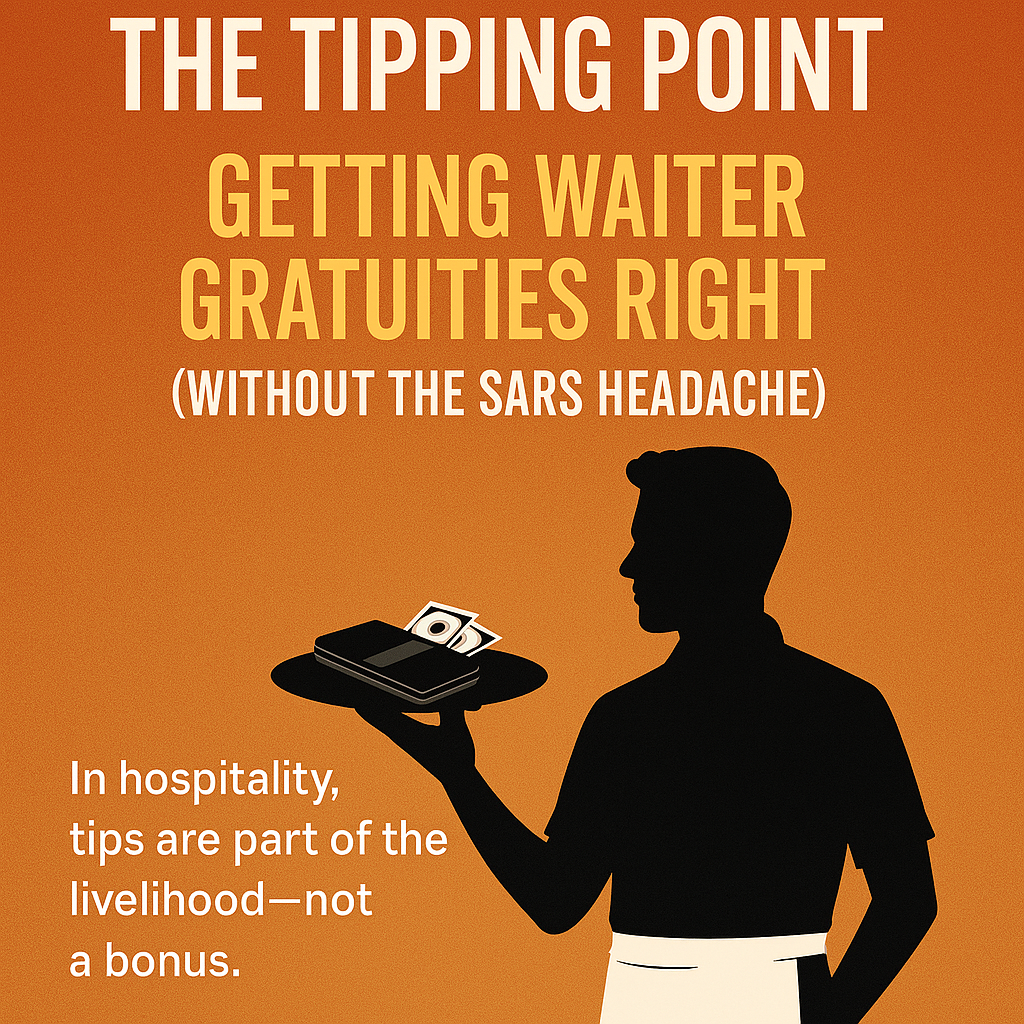
In hospitality, tips are part of the livelihood—not a bonus.
But for many South African restaurant owners, especially those running partially manual environments, tips (especially cash) become a grey area very quickly. Not because people are trying to do the wrong thing—but because there’s no clear structure.
And that’s where problems start.
1. What SARS Actually Expects
Let’s simplify it.
- Tips are income — SARS sees it as part of the waiter’s earnings.
- The waiter is responsible for declaring it.
- But if the business collects and redistributes tips (like a pool), it can be seen as remuneration.
The moment it looks like salary, you’re responsible for PAYE, UIF, and SDL.
So the key principle is simple:
Don’t own the tips—facilitate them.
2. If You Don’t Have a POS System, You Still Need Control
You don’t need expensive systems to run a clean operation. You need consistency.
A simple daily tip declaration process already puts you ahead of most:
- Waiters record total tips (cash and card) at the end of each shift
- A supervisor signs off
- Totals are tracked weekly in a master sheet
That’s it.
What you’re doing here is turning something informal into something accountable—without overengineering it.
3. Using SAGE to Strengthen the Structure
If you want to take it one step further, reflecting tips on payroll brings real value.
- Create Tips/Gratuities code
- Capture the earnings so they reflect on the IRP5
- Offset it with a deduction if cash was already taken home
From a business perspective, it’s neutral.
From a staff perspective, it’s powerful.
Now their real income is visible, which matters when they apply for credit, rent property, or finance a vehicle.
Final Thought
This isn’t just about compliance.
It’s about running a business that’s clean, consistent, and fair to the people who keep it going every day.
Most issues around tips don’t come from bad intent.
They come from lack of structure.
If you’re unsure whether your current setup creates risk, it’s time to review it…